

Community journalism
What Counts as Community Journalism in 2026?
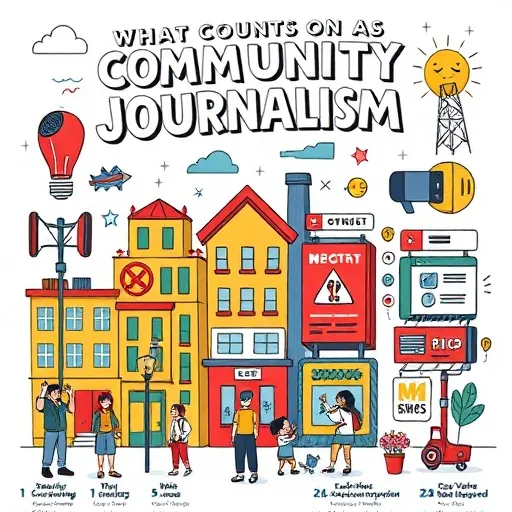
Before we jump into the good stuff, let's get clear on what we're actually talking about. Community journalism is reporting that's made by, for, and about a specific geographic area or identity-based group. It puts local relevance way ahead of mass appeal, leans hard into civic engagement, and usually involves some kind of collaboration between professional journalists and everyday residents. Some of the best community journalism examples out there blur that line entirely.
But here's the thing — in 2026, the definition has stretched. It now covers hyperlocal newsletters, community-run social channels, participatory reporting projects, and even AI-assisted local content workflows. What holds all these community journalism examples together is a shared commitment to proximity — whether that's geographic, cultural, or thematic — and to serving audiences that mainstream outlets keep overlooking. That's the thread running through every community journalism example worth studying right now.
Why Local Trust, Civic Engagement, and Community Journalism Examples Matter More Than Ever in 2026
Trust in big-media news outlets has been sliding for years. Audiences are skeptical of centralized narratives and hungry for info that hits their daily lives directly — school boards, local budgets, small business openings, public safety, and neighborhood events. This is exactly the gap that community journalism examples keep filling.
According to industry pros tracking media consumption patterns in 2026, local and community-focused outlets consistently beat national ones on trust metrics. People want to see their neighbors quoted, their streets photographed, their concerns addressed. That's the core value proposition, and it shows up again and again in community journalism examples across the country.
From an SEO and NLP angle, this trust turns into engagement signals that search systems love to reward: longer dwell time, repeat visits, local intent matching, and strong topical authority within a tight geographic niche. Community journalism examples are, in many ways, the ultimate local SEO play — but only when they're done authentically, not manufactured.
Hyperlocal Newsletters, Resident-Led Reporting, and Other Community Journalism Examples That Work
Let's get concrete. Here are community journalism examples thriving in 2026, each showing a different approach to local news and civic engagement.
1. Hyperlocal newsletters run by residents. One of the most successful models right now is the resident-led hyperlocal newsletter. In dozens of mid-sized cities, tiny teams — sometimes just one or two people — push out weekly email digests covering everything from zoning hearings to restaurant openings to youth sports results. What makes these community journalism examples work is the personal voice. Readers know the publisher. They see them at the grocery store. The newsletter becomes a trusted filter, not just a feed. From a content strategy standpoint, these rank well for long-tail queries like "what's happening in [neighborhood] this weekend" because they publish consistently and go deep on niche topics. Industry observers note that some of these have grown into sustainable small businesses funded by local sponsorships and paid subscriptions rather than programmatic ads. That's a meaningful shift — community journalism as a viable micro-business, and one of the more inspiring community journalism examples out there.
2. Participatory reporting projects. Another powerful model is participatory reporting, where newsrooms invite residents to contribute questions, photos, and first-hand accounts. Classic format: the "community question" column, where readers submit questions about local issues and journalists investigate. In 2026, this has gone multimodal — residents submit voice notes, short videos, and geotagged photos, and newsrooms verify, contextualize, and publish. The result feels co-created because it is. These community journalism examples also generate rich structured data. When a local outlet publishes a community-sourced story about, say, a dangerous intersection, it often includes location metadata, testimonials, and follow-up coverage. That depth signals to search engines that the outlet has genuine topical authority on that specific local issue.
3. Neighborhood social channels as news sources. Let's address the elephant in the room — private groups and local forums have become de facto news sources for millions. While they're not journalism in the traditional sense, professional community journalists now actively monitor and verify what circulates in these spaces. Some of the strongest community journalism examples involve local reporters treating these channels as a tip line — confirming rumors, debunking misinformation, and surfacing stories that would otherwise stay buried. A skilled journalist can take a chaotic thread of neighbor complaints and turn it into a well-sourced report on, say, a utility billing error affecting hundreds of households. For content teams, the lesson is simple: listen where your audience already talks, then add value through verification and context.
4. Community radio and podcast revivals. Audio is having a moment. Local podcasts and low-power community radio stations are producing deeply local content — oral histories, weekly civic roundtables, immigrant community storytelling — that resonates with audiences tired of national punditry. These community journalism examples also perform surprisingly well in search and discovery. Transcripts of local audio create indexable text that ranks for hyper-specific queries. A podcast episode about a town's water infrastructure can rank for years for queries about local water quality.
5. Student and civic journalism collaborations. Universities and civic organizations are partnering with local outlets to produce community journalism at scale. Journalism students, supervised by professionals, cover municipal meetings, local elections, and community events that would otherwise go unreported. This model builds a pipeline of trained reporters while filling critical coverage gaps. It's also an SEO win — sustained, dated, location-tagged coverage builds a deep archive of local content that compounds in value. These community journalism examples show how civic engagement and education can reinforce each other.
6. Bilingual and immigrant community outlets. Some of the most important community journalism examples come from bilingual and immigrant-focused outlets. These publications serve audiences that mainstream media consistently underserves, covering immigration policy changes, local services, health information, and cultural events in multiple languages. From an NLP and search perspective, multilingual local content is a fascinating area. It requires careful entity handling — place names, institutional names, and cultural references often translate imperfectly — and it rewards publishers who invest in proper localization rather than machine translation alone.
An SEO Playbook Built on Community Journalism Examples and Local Intent Signals
If you're publishing community journalism — or any hyperlocal content — here's how to make it discoverable without sacrificing authenticity. Every one of these tactics shows up in the community journalism examples above.
- Own your geographic entity. Consistently reference your locality, neighborhood names, and landmarks. Search systems rely on entity recognition to match local intent. Use natural language, not keyword stuffing.
- Build topical authority in a narrow niche. Instead of covering "news" broadly, cover one community deeply. Depth beats breadth for local search visibility — a pattern you'll see in nearly all community journalism examples that rank well.
- Structure content for NLP parsing. Use clear headings, short paragraphs, lists, and FAQ-style sections. These structures help language models extract answers and surface your content in AI-generated summaries.
- Publish consistently and date everything. Local content compounds. A well-maintained archive of dated local coverage becomes a long-term asset.
- Include people, places, and processes. Community journalism naturally contains rich entities — local institutions, public processes, recurring events. These are exactly what NLP systems use to build topical maps.
- Optimize for voice and conversational queries. People ask "is the farmers market open today in [town]" — write content that answers those questions directly and conversationally.
Sustainability, Misinformation, and Burnout: Real Challenges Facing Community Journalism Examples in 2026
It's not all optimistic. Community journalism faces real headwinds in 2026, and even the strongest community journalism examples aren't immune.
- Sustainability. Many community outlets run on thin margins. Subscription and membership models work for some; others struggle to stay afloat.
- Misinformation pressure. Local rumors spread fast through social channels. Community journalists must constantly verify and correct, which takes time and resources.
- Platform dependency. Outlets leaning heavily on a single distribution channel are vulnerable to algorithm changes. Diversifying — email, search, direct, audio — is essential.
- Burnout. Small teams covering big beats is a recipe for exhaustion. Collaborative models and shared resources help, but the pressure is real.
Industry professionals consistently point to one solution: community engagement. Outlets that genuinely involve their audiences — through memberships, events, feedback loops, and participatory reporting — tend to survive and even thrive. The community journalism examples that last are the ones that treat their audience as partners, not just readers.
What the Engagement Data Says About Community Journalism Examples and Topical Authority
Analysts tracking local media in 2026 report a few consistent patterns across community journalism examples:
- Community-focused outlets see higher engagement rates per article than national outlets publishing comparable volume.
- Local newsletters often hit open rates far above industry averages when they keep a personal, conversational voice.
- Hyperlocal content tends to have longer content lifespans — a story about a local zoning decision can drive traffic for years.
- Multilingual and immigrant-focused outlets are among the fastest-growing segments in local media.
These patterns reinforce a simple insight: proximity creates relevance, and relevance creates engagement. Search and AI systems increasingly reward both — which is why community journalism examples keep outperforming expectations.
How to Launch Your Own Community Journalism Examples: A Practical Civic Engagement Framework
Thinking about launching or improving a community journalism effort? Here's a practical starting framework drawn from the community journalism examples above.
- Pick a community you actually belong to. Authenticity can't be faked. Choose a neighborhood, identity group, or issue area where you have genuine knowledge and relationships.
- Start with a simple format. A weekly newsletter is still the lowest-friction entry point. One email, one focus, one voice.
- Listen before you publish. Spend a month monitoring local conversations, attending meetings, and talking to residents. Your first stories will emerge naturally.
- Build a verification habit. Every claim gets a source. Every rumor gets checked. Trust is your only currency.
- Design for discovery. Use clear headings, location references, and conversational language. Your content should work for humans first and algorithms second.
- Invite participation early. Ask readers what they want covered. Publish their questions. Feature their photos (with permission).
- Measure what matters. Open rates, repeat readers, and community feedback matter more than raw pageviews.
Community journalism in 2026 is a story of reinvention — and the community journalism examples we've covered here prove it. Newsletters run by neighbors, participatory reporting projects, verified social channel monitoring, local audio, student collaborations, and bilingual outlets serving communities long ignored. What unites these community journalism examples is a shared belief that proximity matters — that the news closest to us is often the news that matters most.
For publishers and content strategists, the takeaway is clear: local, authentic, well-structured storytelling is both a civic good and a practical SEO advantage. Search systems and language models are increasingly built to reward topical depth, geographic relevance, and genuine engagement. Community journalism delivers all three — not as a trick, but as its fundamental purpose. Whether you're a solo newsletter writer, a civic organization, or a media team exploring local expansion, the playbook is the same: know your community, serve it consistently, and let trust do the compounding. That's how community journalism continues to reshape the news — one neighborhood at a time.